Recognizing Court Reporting: A Review of Its Function in the Legal Process
Court reporting is an essential component of the legal system. It ensures that every spoken word during tests and depositions is precisely transcribed. This transcription provides a reliable record for future recommendation. Stenotype reporter have specialized abilities and should browse various modern technologies. durham court reporting. As the lawful landscape evolves, so also does the function of these specialists. Comprehending their influence elevates vital inquiries regarding the future of lawful documentation and liability
The Relevance of Accurate Transcription in Lawful Procedures

Precise transcription plays a vital function in legal proceedings, working as the structure for justice and accountability. Court reporters, charged with catching talked discussion during trials and depositions, assure that every word is documented with accuracy. This transcription becomes a critical document, enabling courts, courts, and attorneys to evaluate the procedures accurately. Errors or omissions in transcription can lead to misconceptions, misconceptions, and possibly unjustified end results.
Moreover, these records offer as official documents that can be referenced in future lawful activities, charms, or academic evaluations. The integrity of the judicial procedure counts heavily on the integrity of these papers. The capability to offer a clear, verbatim account of testimonies and debates is essential in upholding the policy of law. The significance of accurate transcription can not be overstated; it is crucial for assuring fair tests and maintaining public trust fund in the legal system.
The Skills and Credentials of Court Reporters
While the role of a stenotype reporter is vital in the lawful system, it requires a distinct set of abilities and certifications to guarantee reliable efficiency. Effectiveness in shorthand or voice writing is essential, making it possible for reporters to capture talked language precisely and effectively. In addition, a strong grip of lawful terms and procedures is necessary, as court reporters should comprehend complex conversations that occur during hearings and tests.
Additionally, attention to detail and extraordinary paying attention abilities are necessary to guarantee accurate records. Several court reporters have qualification from recognized programs, which often include strenuous training in transcription methods and legal principles. Strong social abilities additionally play a substantial role, as press reporters frequently engage with attorneys, witnesses, and courts. Ultimately, the mix of technological efficiency, lawful knowledge, and social capabilities gears up stenotype reporter to fulfill their duties efficiently within the judicial system
Various Kinds Of Court Reporting Solutions
Court reporting solutions incorporate a variety of specialized functions customized to meet the needs of the lawful system. One famous type is deposition reporting, where court reporters transcribe witness testaments outside of court settings, frequently for use in tests. Another solution is real-time reporting, which provides instantaneous transcription throughout proceedings, allowing lawyers to gain access to online message feeds. Furthermore, some court reporters provide transcription of audio and video clip recordings, guaranteeing accurate documentation of occasions.
Closed captioning services are likewise provided, making lawful proceedings easily accessible to people with hearing impairments. Moreover, several court reporting firms focus on offering particular lawful fields, such as family members law, criminal regulation, or business regulation, thereby using customized know-how. Ultimately, some press reporters may give video deposition solutions, which improve the paperwork process through aesthetic context. Each kind of solution plays a vital function in making certain the accuracy and stability of lawful documents.
The Technology Behind Modern Court Reporting
Modern court reporting depends heavily on sophisticated technology to boost accuracy and effectiveness. Stenography equipments, electronic recording methods, and real-time transcription software application are indispensable parts of this area. These devices not only assist in the transcription procedure yet also assure that lawful procedures are recorded with precision.
Stenography Machines Explained
Stenography machines act as the backbone of modern court reporting, changing talked words right into composed text with amazing efficiency. These specialized devices use an one-of-a-kind key-board layout that enables court press reporters to type syllables and words phonetically, allowing them to catch dialogue at broadband. The usage of shorthand signs means that reporters can record discussions in genuine time, making certain precise records of legal proceedings. Stenography makers are equipped with innovative technology, including software program that can convert stenographic notes right into legible text. This combination of hardware and software greatly enhances the speed and precision of court reporting, making it an indispensable device in the legal area. As an outcome, stenography remains a vital ability for experts in the court.
Digital Recording Techniques
Advancements in innovation have broadened the tools available for court reporting past conventional stenography devices. Digital taping techniques have become a trustworthy option, recording audio and video clip of lawful proceedings with high integrity. These systems make use of microphones and tape-recording tools tactically placed to guarantee quality and reduce history sound, providing a detailed record of discussions and testaments. The recorded material can be played back for precision throughout transcription, enabling court press reporters to verify details successfully. In addition, digital recordings can be saved firmly for future referral, boosting availability and protecting the integrity of the lawful procedure. As courts welcome these modern-day technologies, digital recording strategies play a progressively essential function in keeping exact and efficient documents.
Real-Time Transcription Software Program
As courtrooms progressively take on modern technology to boost the legal procedure, real-time transcription software program has become a necessary tool for court reporters. This innovative innovation allows stenotype reporter to transcribe spoken dialogue promptly, offering prompt accessibility to exact records during process. By converting spoken words into text as they are talked, real-time transcription software assists in effective communication in between attorneys, courts, and various other court individuals. The software application frequently integrates with courtroom audio systems, making certain that every word is caught with accuracy. Furthermore, it can create records for review and Visit This Link distribution, improving the documentation process. Consequently, real-time transcription software application not only enhances the effectiveness of court reporting yet also enhances the total ease of access of legal proceedings.
The Role of Court Reporters in Preserving Courtroom Integrity
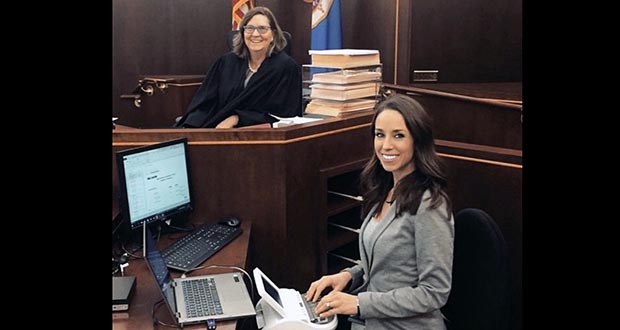
Moreover, court press reporters add to the transparency of the judicial procedure. By providing detailed transcripts, they make it possible for the public and media to gain access to court procedures, cultivating responsibility. Their visibility in the courtroom likewise helps maintain etiquette, as their activities emphasize the seriousness of the legal procedure.
Along with technological abilities, stenotype reporter have to display expertise and impartiality, important for preserving the stability of the judicial system. Eventually, their diligent initiatives support fair test rights and strengthen public self-confidence in the lawful framework.
The Future of Court Reporting in an Evolving Legal Landscape
As the legal landscape progresses, court reporting encounters significant adjustments driven by technical improvements and a growing shift towards remote services. These developments are reshaping just how stenotype reporter run, affecting both the speed and accuracy of legal paperwork. The future of this career will likely rest on its adaptability to these arising fads.
Technological Advancements Influencing Reporting
Numerous technical innovations are improving the landscape of court reporting, ushering in a brand-new period of performance and precision. Digital taping systems have come to be commonplace, allowing for accurate audio capture during proceedings. These visit their website systems frequently integrate with transcription software application, assisting in faster turnaround times for transcripts. In addition, expert system is playing a considerable duty in enhancing the transcription process, with speech recognition modern technology assisting press reporters in producing a lot more accurate documents. Cloud-based storage solutions improve availability, allowing legal specialists to obtain and share records conveniently. As these innovations remain to develop, they guarantee to more change the court reporting occupation, boosting the overall lawful process while preserving high standards of expertise and honesty.
Change Towards Remote Solutions
The lawful landscape is progressively accepting remote solutions, reshaping how court reporting is carried out. This shift has been sped up by technological improvements and the need for flexibility during recent international events. Stenotype reporter now make use of video clip conferencing platforms to assist in depositions and hearings, enabling greater accessibility and effectiveness. Remote solutions enable involvement from different places, decreasing traveling expenses and logistical challenges. Furthermore, digital transcription devices enhance precision and enhance the documents process. As the lawful market adapts, stenotype reporter are called for to create brand-new skills and acquaint themselves with arising modern technologies. This advancement presents both opportunities and obstacles, pressing the profession towards a more incorporated, technology-driven future while keeping its core dedication to supplying exact and reputable legal paperwork.

Regularly Asked Inquiries
Exactly How Much Do Court Reporters Commonly Gain Each Year?
Court reporters typically earn in between $50,000 and $100,000 every year, depending on experience, location, and the demand for services. Specialized certifications or abilities can better raise their gaining possibility in numerous lawful settings.
What Is the Ordinary Duration of Court Reporting Training Programs?
Court reporting training programs normally last between 18 months to 2 years. This period varies based upon the organization and the particular educational program, incorporating both concept and practical skills necessary for aiming stenotype reporter.
Can Court Reporters Job From Another Location for Lawful Proceedings?
Yes, court press reporters can function from another location for lawful procedures, making use of innovation to transcribe audio and video clip feeds. This versatility permits them to supply exact documentation while preserving the honesty of the lawful procedure.
What Is the Difference Between a Court Reporter and a Stenographer?
A stenotype reporter concentrates on recording legal proceedings, while a clerk focuses on shorthand composing for different contexts, consisting of conferences and seminars. Both functions entail recording talked words but vary in their particular applications and environments.
Are Court Reporters Required to Have Licenses or certifications?
Yes, court reporters are normally required to get accreditations or licenses. These qualifications ensure they have the essential skills and expertise to accurately transcribe legal procedures, keeping the stability of the judicial process.
Several court reporters possess qualification from certified programs, which commonly include extensive training in transcription methods and legal principles. One famous type is deposition reporting, where court press reporters record witness testimonies outside of court setups, typically for use in tests. As court rooms progressively adopt modern technology to enhance the legal procedure, real-time transcription software has actually become an essential device for court reporters. Yes, court press reporters can work remotely for lawful process, making use of innovation to record sound and video clip feeds. A court press reporter specializes in recording legal proceedings, while a clerk focuses on shorthand creating for different contexts, including conferences and conferences.